What Kind of Dents Can (and Cannot) Be Repaired?
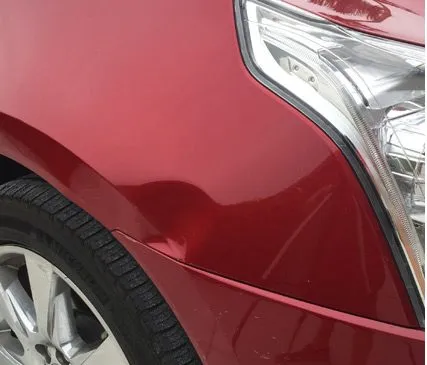
Paintless Dent Repair (PDR) is an incredibly versatile, cost-effective, and fast method of restoring your car's body panels. However, it is a specialized craft with physical limits. Because PDR relies on the elastic properties of automotive metal and paint, certain types of damage are perfectly suited for PDR, while others require a traditional body shop.
If you are evaluating damage on your vehicle, understanding these physical boundaries can help you choose the right repair path.
Dents That CAN Be Repaired with PDR
The vast majority of everyday, non-collision vehicle damage is prime for paintless restoration:
- Door Dings: Minor, shallow dings caused by car doors or grocery carts are the easiest repairs, taking less than an hour per panel.
- Hail Damage: PDR is the insurance-preferred method for hail restoration, resolving thousands of dings across a single vehicle while keeping factory clear coats intact.
- Body Line Creases: Even if a dent runs directly across a sharp body contour crease, an experienced technician can release the structural tension and restore the line.
- Large, Shallow Dents: Dents from basketballs, tree branches, or low-speed impacts can look catastrophic, but if the metal is not stretched or creased sharply, PDR can completely restore the panel.
"If the paint is intact and the metal hasn't been creased or torn, there's a 90% chance we can repair it paintlessly—even if the dent is as large as a basketball."
Dents That CANNOT Be Repaired with PDR
PDR is not suitable when the metal or paint finish has suffered structural failure:
- Cracked, Peeling, or Missing Paint: If the impact scraped off the color coat or cracked the clear coat down to the primer, PDR cannot restore the paint. The panel will require conventional sanding and spraying.
- Heavily Stretched Metal: If a dent is extremely deep, pointed, and sharp at its center, the metal molecules have stretched. Massaging it back will leave behind a wavy, excess metal surface.
- Torn or Ruptured Metal: If the metal panel has split, PDR cannot weld it back. Traditional collision repairs are necessary.
- Chrome and Plastic Parts: PDR only works on sheet metals (steel and aluminum). Chrome bumper panels are too rigid and will crack, while plastic bumpers lack the structural memory required for massaging.
Get an Expert Opinion
Often, a dent that looks unrepairable to an untrained eye is actually a perfect candidate for PDR. Before booking a body shop, text photos of the damage to Paintless DR Mobile at 817-728-9500. Our master technician will assess the paint and contour, giving you an honest, upfront opinion.
Frequently Asked Questions
What is the maximum size dent you can repair with paintless dent repair? ➔
There is no strict size limit. While PDR is famous for small door dings, master PDR technicians routinely repair large, complex dents the size of basketballs or entire fenders, provided the metal is not creased, stretched beyond its limits, or missing paint.
Can you perform paintless dent repair on a plastic bumper? ➔
No. PDR tools and massage methods are strictly designed for sheet metals (steel and aluminum) that possess structural memory. Plastic bumper covers do not have metal memory. While plastic indentations can sometimes be popped out using heat, this is a separate reconditioning process rather than PDR.
What happens if a dent is located directly on a panel edge? ➔
Panel edges (where door skins are rolled and sealed to the inner frame) are double-walled and extremely stiff. Massaging a dent on the absolute edge is highly challenging. However, using specialized thin blades or external glue-pulling, experienced technicians can often restore these edges cleanly.