PDR vs. Traditional Body Shop: The Head-to-Head Comparison
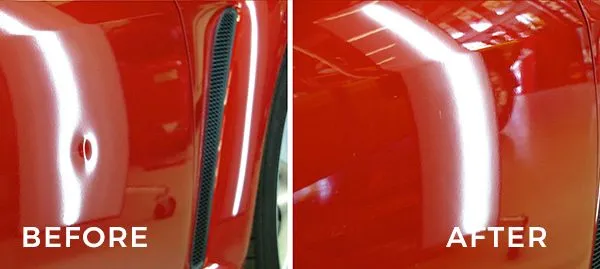
When your car takes a dent, you face a critical decision: should you take it to a traditional body collision shop or call a mobile paintless dent repair technician? While both options aim to fix your vehicle, they use entirely different philosophies, materials, and processes. Understanding the structural differences between these two methods will help you make the best decision for your wallet, schedule, and vehicle's future resale value.
A Comparison at a Glance
Here is how Paintless Dent Repair stacks up against a conventional auto body collision shop across the most critical categories:
1. Material Usage and Philosophy
- Traditional Body Shop: The conventional process involves grinding the factory paint off the damaged panel, hammering the metal roughly back into shape, layering a plastic body filler (such as Bondo) over the metal, sanding it flat, spraying a primer, and then painting the entire panel (and blending into adjacent panels) to match the car.
- Paintless Dent Repair (PDR): The PDR philosophy is non-invasive. The technician accesses the underside of the panel and uses specialized steel rods to slowly massage the metal back into place. No paint, Bondo, sanding, or replacement panels are used. Your original factory paint remains 100% untouched.
2. Repair Times
- Traditional Body Shop: Because traditional repair involves a multi-stage curing process (filler needs to dry, primer needs to dry, paint base coat needs to dry, clear coat needs to dry), your car will typically sit in a body shop for 3 to 14 days, even for minor door dings.
- Paintless Dent Repair (PDR): PDR is a direct, physical massage of the metal. For standard door dings and creases, a mobile PDR technician can complete the repair at your home or office in 1 to 3 hours, meaning zero vehicle downtime for you.
3. Cost Comparisons
Because traditional body shops have massive overhead costs (paint booths, hazardous waste disposal, administrative staffs) and require expensive paint supplies, primers, and fillers, their estimates are routinely double or triple the cost of PDR. While a body shop might charge $800 to repair and paint a dented door panel, a PDR technician can often restore it for $150 to $300.
"Conventional body shops charge for materials, paints, parts, and downtime. PDR cuts out the material costs completely, passing up to 75% savings back to the customer."
4. Impact on Vehicle History and Value
Any repair performed at a traditional body shop is typically logged into database networks, which can trigger a "Collision Damage" report on your car's CARFAX history. Furthermore, aftermarket paint is rarely as durable as the factory paint applied by robots in the manufacturer's cleanroom. Aftermarket paint can fade, bubble, or show mismatched colors over time. PDR preserves your original factory finish, meaning no CARFAX reports, no mismatched paint, and a fully preserved vehicle resale value.
Frequently Asked Questions
How much money can I save by choosing paintless dent repair over a traditional body shop? ➔
By opting for PDR, you can expect to save between 50% and 75% compared to traditional body shop estimates. Because PDR eliminates the need for replacement panels, primer, sanding, fillers, and paint materials, you are only paying for skilled labor, saving hundreds or even thousands of dollars.
Why does a body shop want to repaint my panel when it could be repaired paintlessly? ➔
Traditional body shops are designed around conventional collision workflows: grinding down paint, applying plastic body filler, and painting. This generates higher parts sales, material markups, and paint booth fees. Since PDR requires extreme micro-precision and specialized training, many body shop technicians do not possess PDR certification.
How does PDR keep a collision report off my vehicle's CARFAX history? ➔
Most PDR repairs (especially minor dings paid out-of-pocket) are never reported to insurance databases or public vehicle history reports. Because we do not replace structural parts or report to conventional collision networks, your vehicle retains a clean history report, preserving resale value.